For the research on my planet renderer I have been looking into how icospheres are constructed. The process is rather simple:
Define the triangle edges with three intersecting planes that use the golden ratio (1+sqrt(5))/2 : 1
Create 20 triangles between the vertices of those planes:
12 vertices
20 triangles
Subdivide those triangles and keep them in the shape of a sphere by making sure the distance from the center is the radius of the sphere:
80 triangles 320 triangles 1280 triangles
There is barely a noticable difference from how icospheres look like when adding them via the Add Mesh menu in Blender:
The nice thing about icosahedrons is that they use equilateral triangles of the same scale everywhere, so they have a nicely distributed amount of surface detail, so it might be quite ideal for rendering of planets.
Author: Leah Lindner
Hi, I'm a German–English game developer and render programmer based in Brighton, UK. Welcome to my website!
I’ve been passionate about computer graphics ever since I discovered Blender in 2008, which led me to earning a BSc in Digital Arts and Entertainment and begin my game-dev career in 2017. Ever since, I’ve had the opportunity to work with international teams of all sizes on a wide range of projects, from small prototypes to large AAA productions.
I’m a broadly creative person with a strong eye for technical detail. I love learning how things work and creating visually compelling experiences, and particularly enjoy graphics programming because it combines both engineering and artistic challenges.
My experience with diverse tools and pipelines enables me to build systems from scratch, as well as contribute effectively to existing projects. If you’re interested in collaborating, please don’t hesitate to reach out!
View all posts by Leah Lindner
2 thoughts on “Icosahedrons | How Blenders IcoSpheres work”
Hi! I love all the work you’ve done and am very appreciative of the detailed explanation. I was wondering if you could elaborate on why you eventually chose to go with Icosahedrons instead of a Spherified Cube. The only reasoning I can find is that there is a more even distribution of triangles on the sphere. This is driving my decision too, but I was wondering if you really found that it was the correct choice or if you had any other reasoning to stick with an Icosahedron? Any further elaboration would be much appreciated! Thanks!


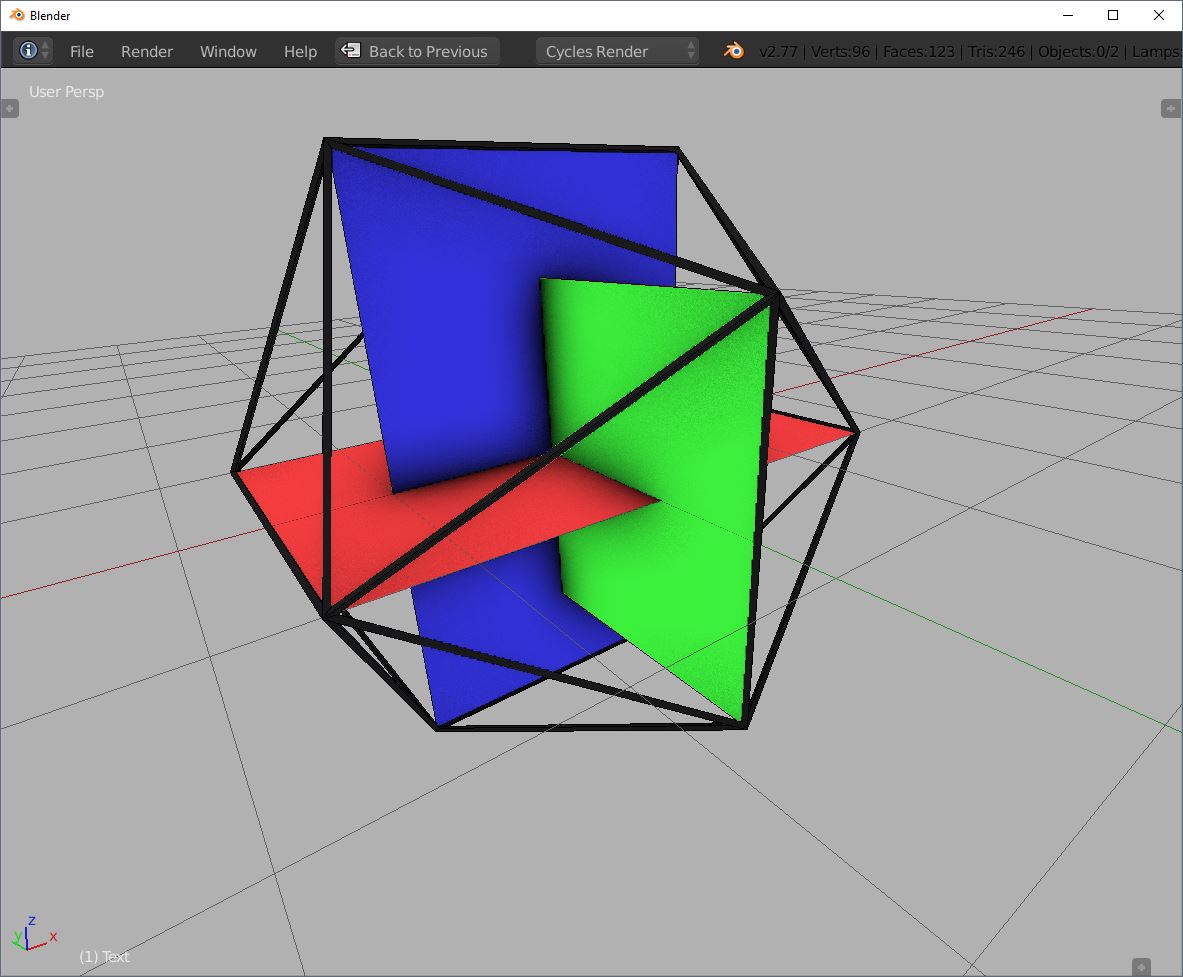 12 vertices
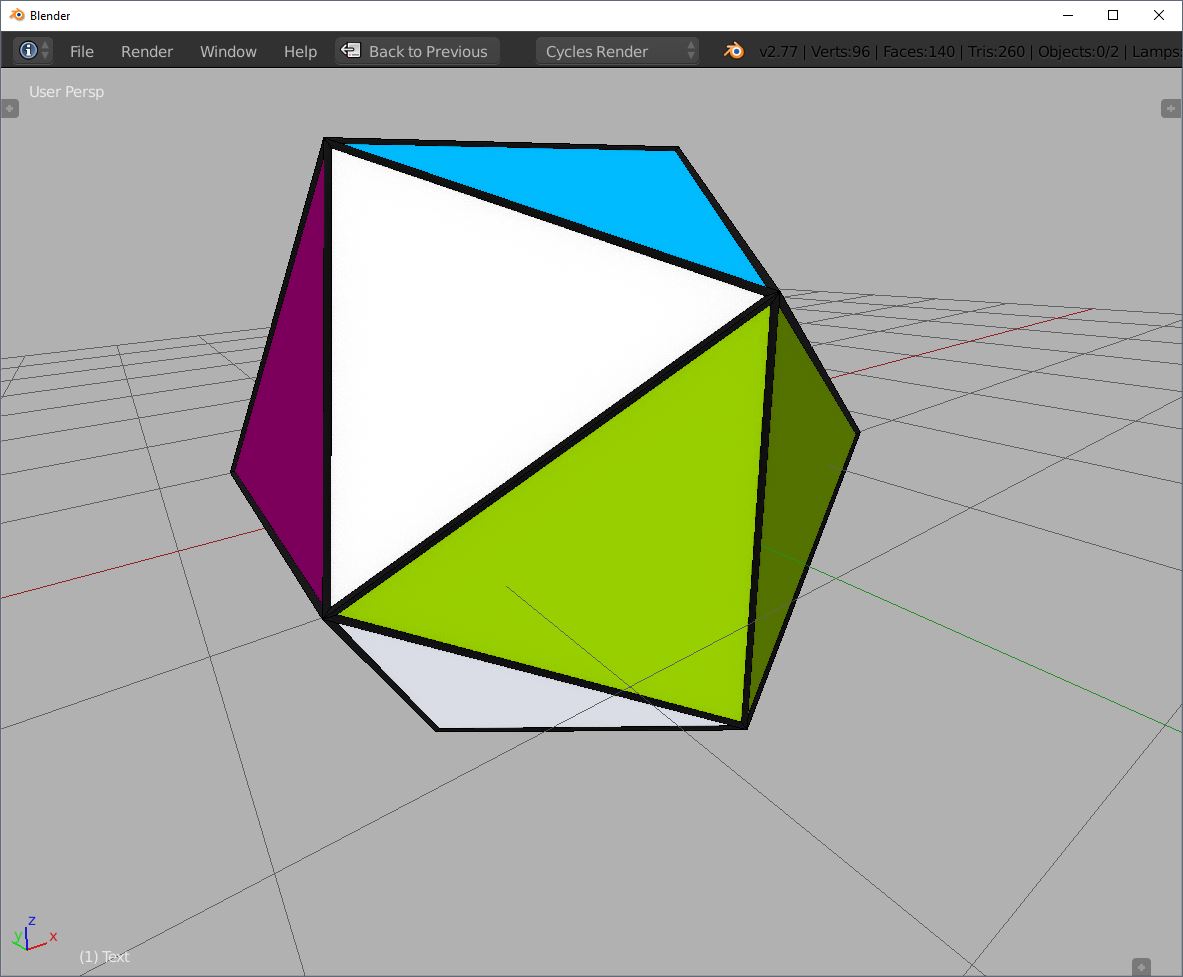 20 triangles
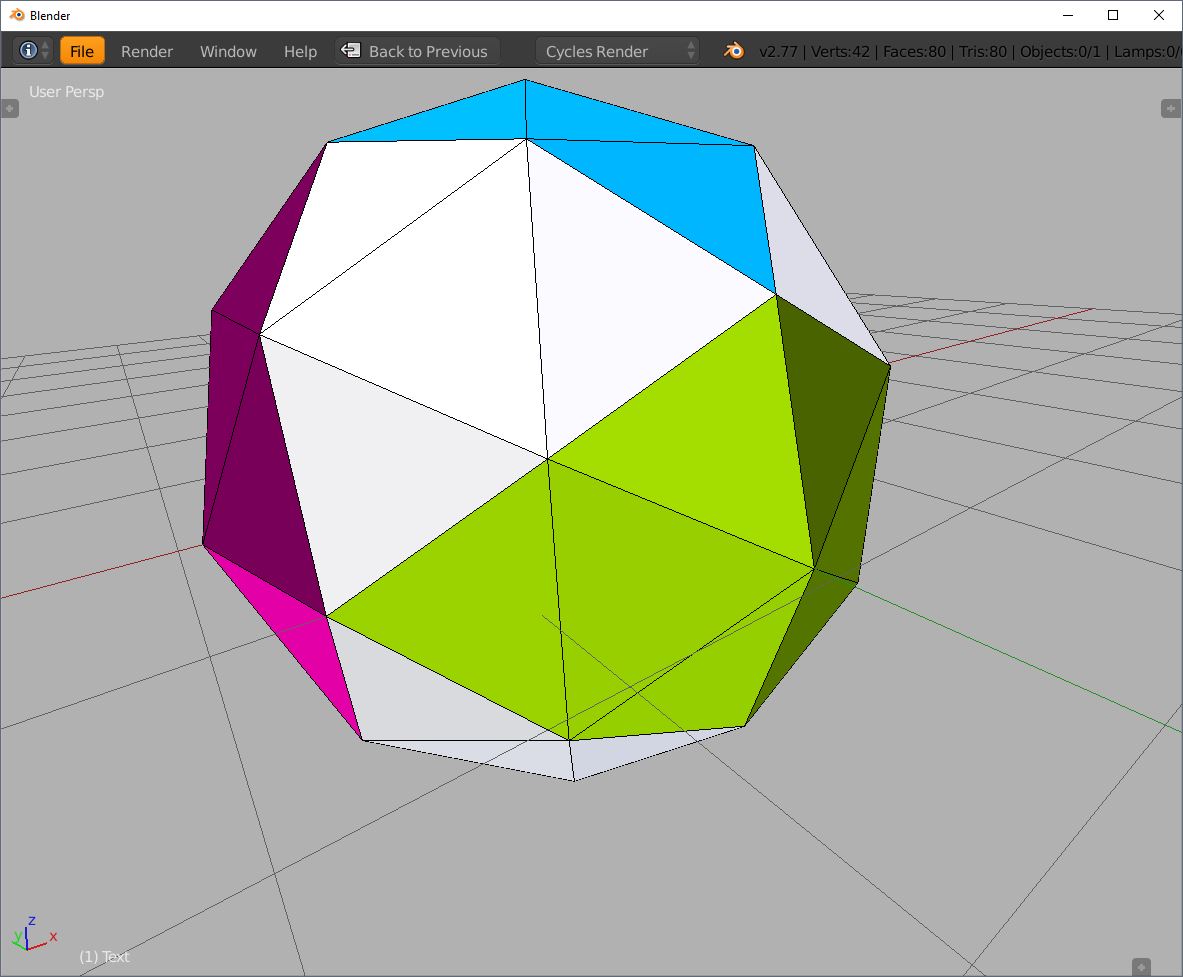 80 triangles
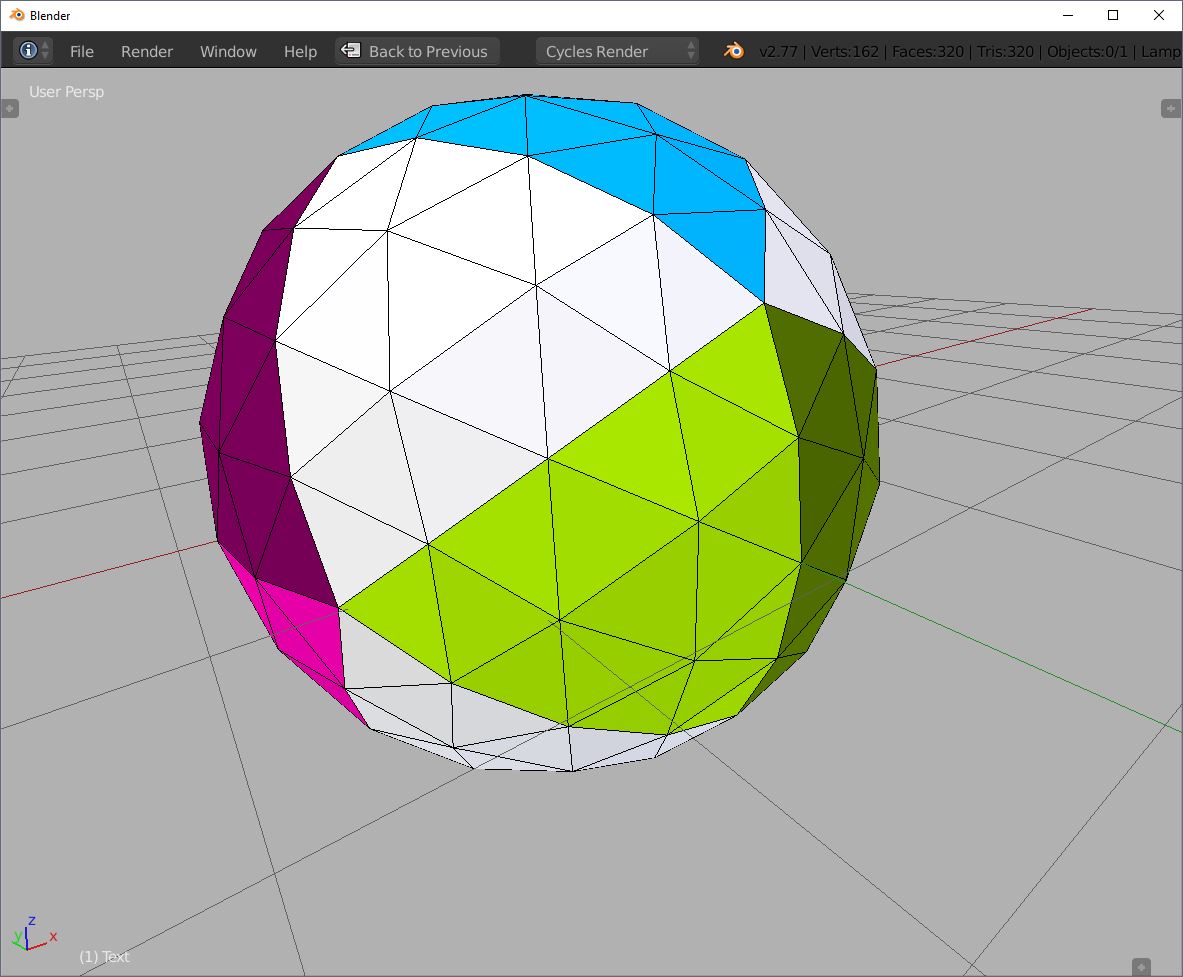 320 triangles
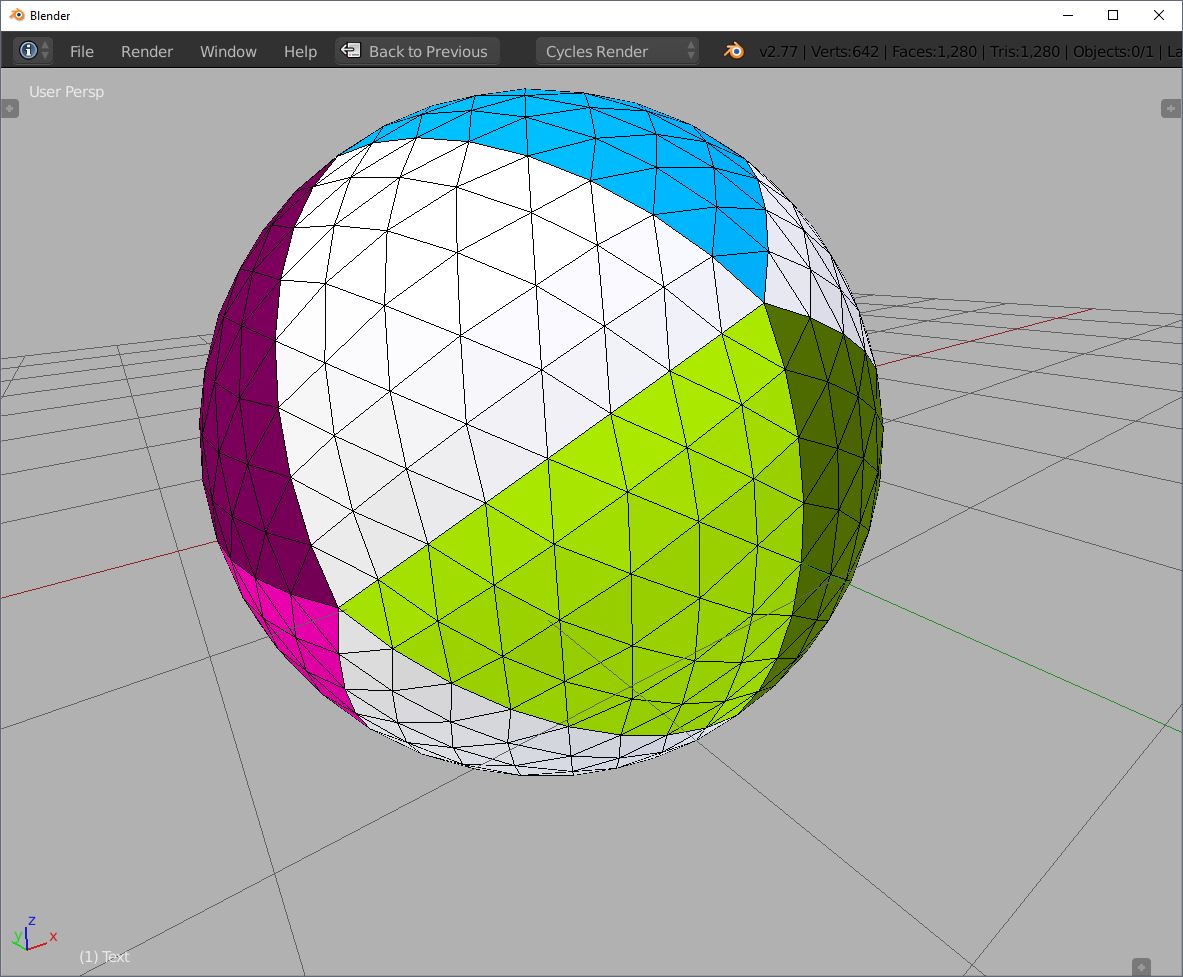 1280 triangles
Hi! I love all the work you’ve done and am very appreciative of the detailed explanation. I was wondering if you could elaborate on why you eventually chose to go with Icosahedrons instead of a Spherified Cube. The only reasoning I can find is that there is a more even distribution of triangles on the sphere. This is driving my decision too, but I was wondering if you really found that it was the correct choice or if you had any other reasoning to stick with an Icosahedron? Any further elaboration would be much appreciated! Thanks!